Sustainable Farmers
A non-profit for sustainable aggriculture
About the project
Encouraging individuals to donate to a non-profit
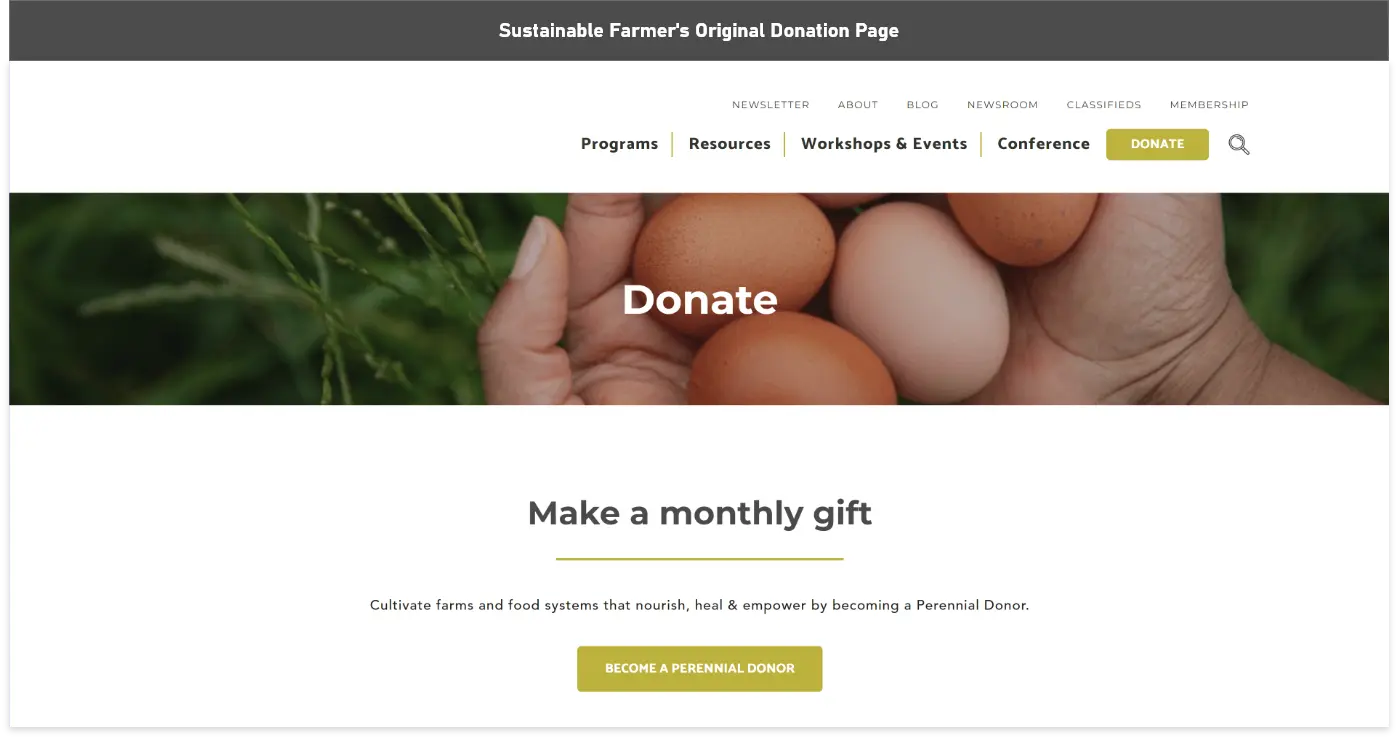
Maintaining a steady stream of donations is a problem that most non-profits have faced at one time or another. Sustainable Farmers is a community based non-profit that has historically achieved its financial objectives through a membership program it has with its farmer-members. However, the company wanted to expand its donor base and increase its revenue by allowing individual contributors to donate to the non-profit organization. So in this study, my team was tasked with redesigning the donation process to appeal towards individual contributors rather than farmer-members. This includes e-mail, website, and donation material. However, for brevity, I will focus on the website portion of the project. The main challenge in this project is that the our team needed to research how contributors thought about donations, how they viewed Sustainable Farmers, find out what motivated them to donate, and then design an effective solution that would benefit the business and appeal to contributors. In the end, our team submitted a redesigned donation process that was in line with stakeholder expectations However, this case study will focus on the redesign of the company's donation page.
You can see a redacted version of the full 67 page study here.
Like many consulting engagements, this project was created under a non-disclosure agreement with Fox Management Consulting. Thus the name of the ultimate client has been renamed to HealthMap in order to keep the identity of the client a secret in accordance with the non-disclosure agreement.
Role
UX Researcher
Client
Fox Management Consulting
Type of Business
B2C
Date
2019
Planning phase - Customer Interviews
Finding the right customers to interview
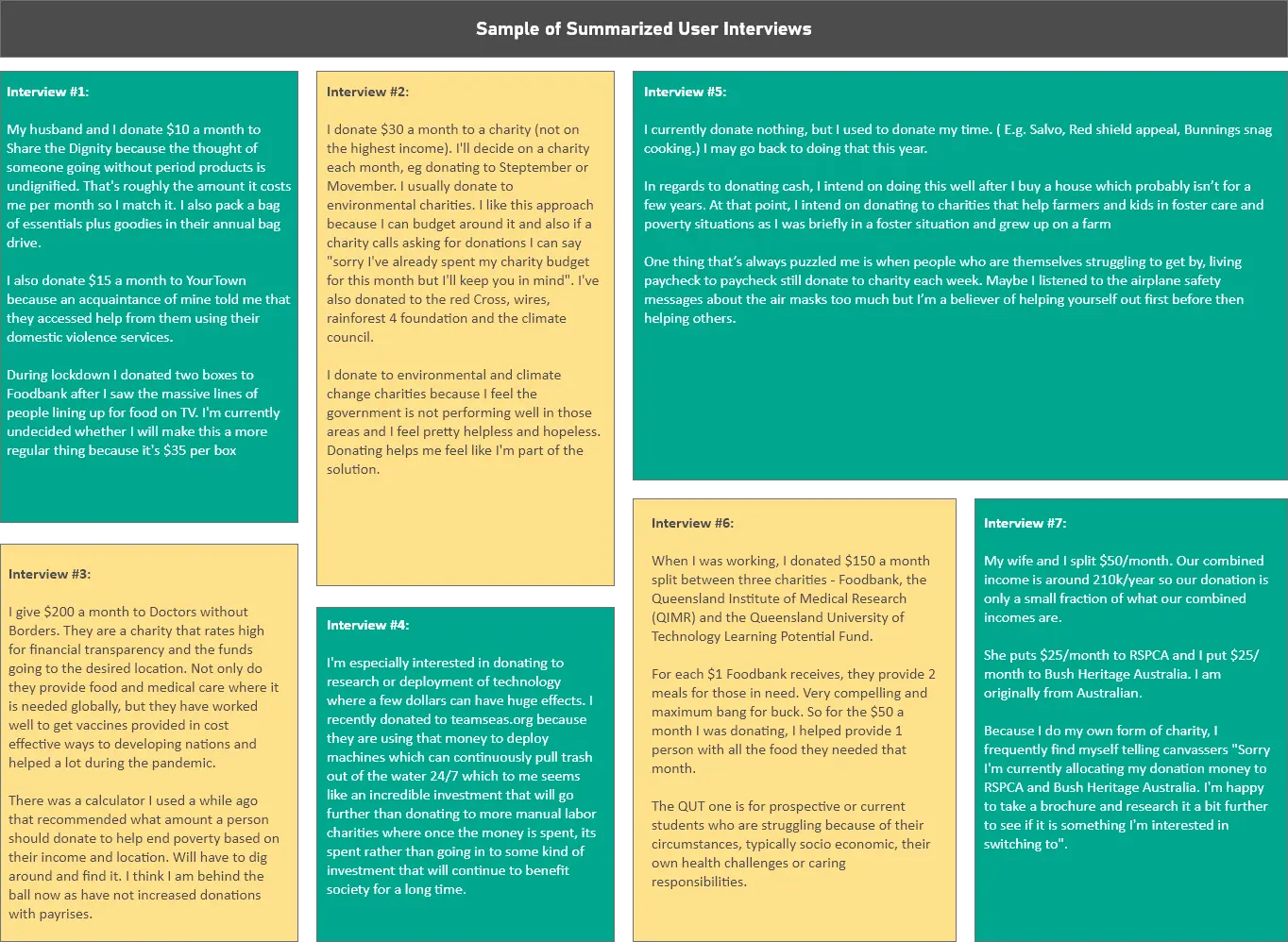
In order to develop a solution for the contributor user group, we must start by identifying the right users.This phase included a 202 respondent survey, and face-to-face interviews with current and former donors. Below is a sample of what users spoke about during the interviews
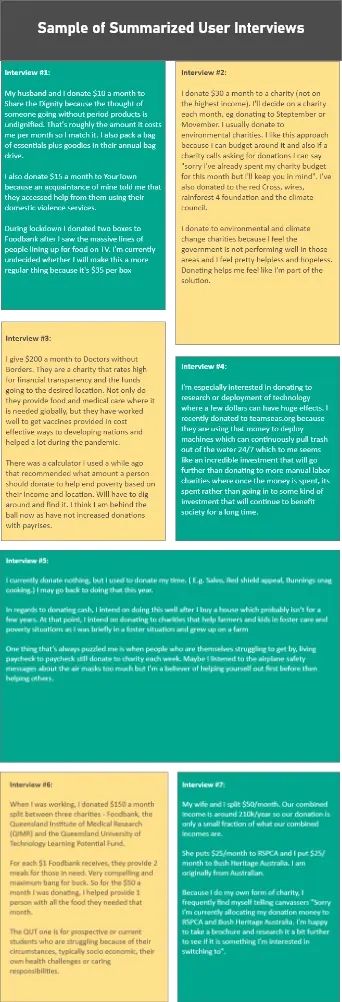
Planning phase - Interview Insights
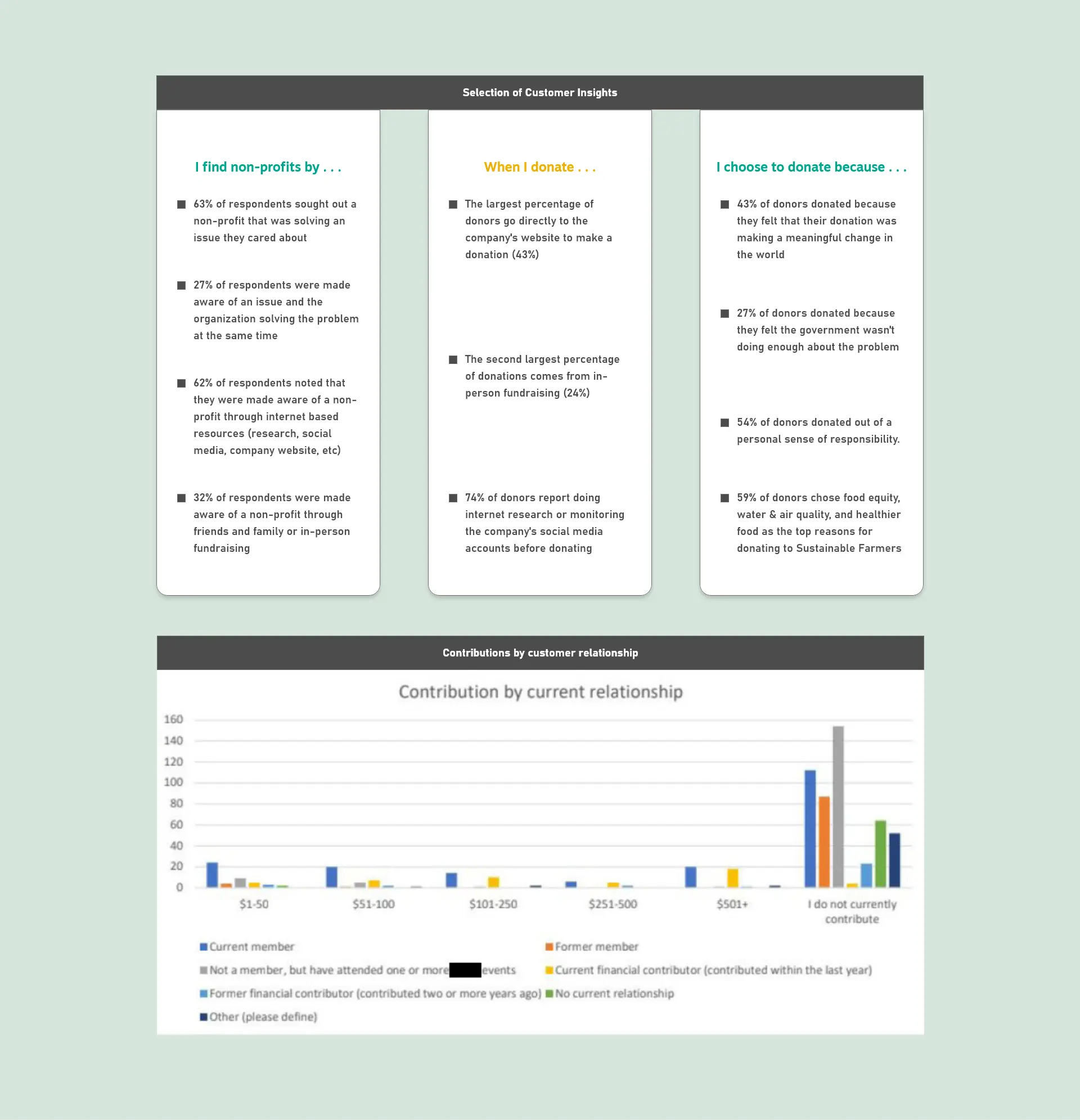
Customer pains, gains, and behavior
Understanding customer behavior is very important in designing a solution for a specific user group. In this study, we wanted to understand the pains, gains, and motivations users experienced when deciding to donate towards a charitable cause, and what other non-profits these donors gave to. Below is a brief look at the insights we obtained.

Planning phase - Customer Personas
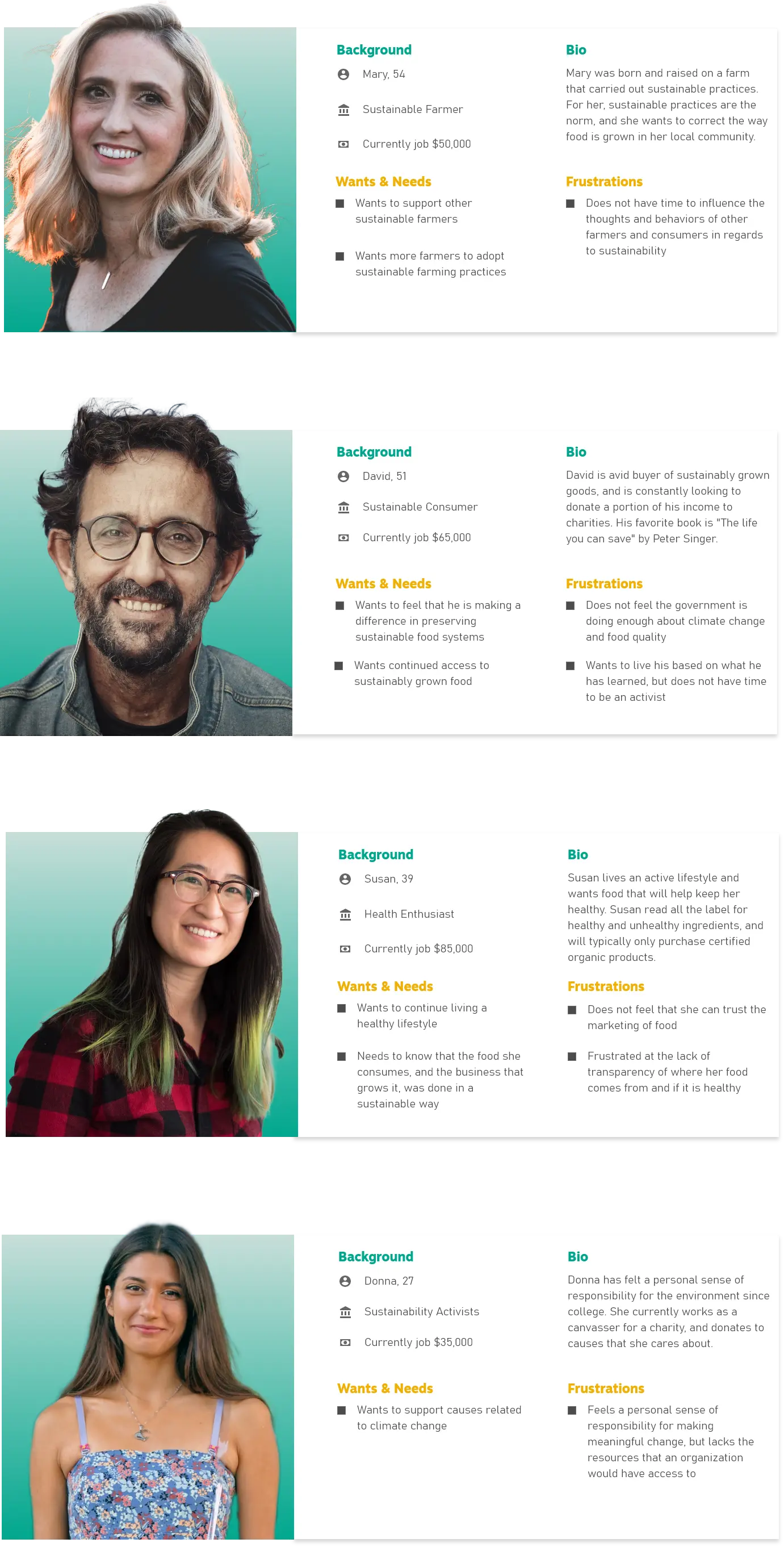
Who are our customers?
During the interview and survey phase of our research, we started to notice that users fell into one of four groups: Farmers who were concerned with sustaibable practices, consumers who consciously made sustainable purchases, health conscious people, and sustainability activists.

Design phase - Lo-fi Wireframes
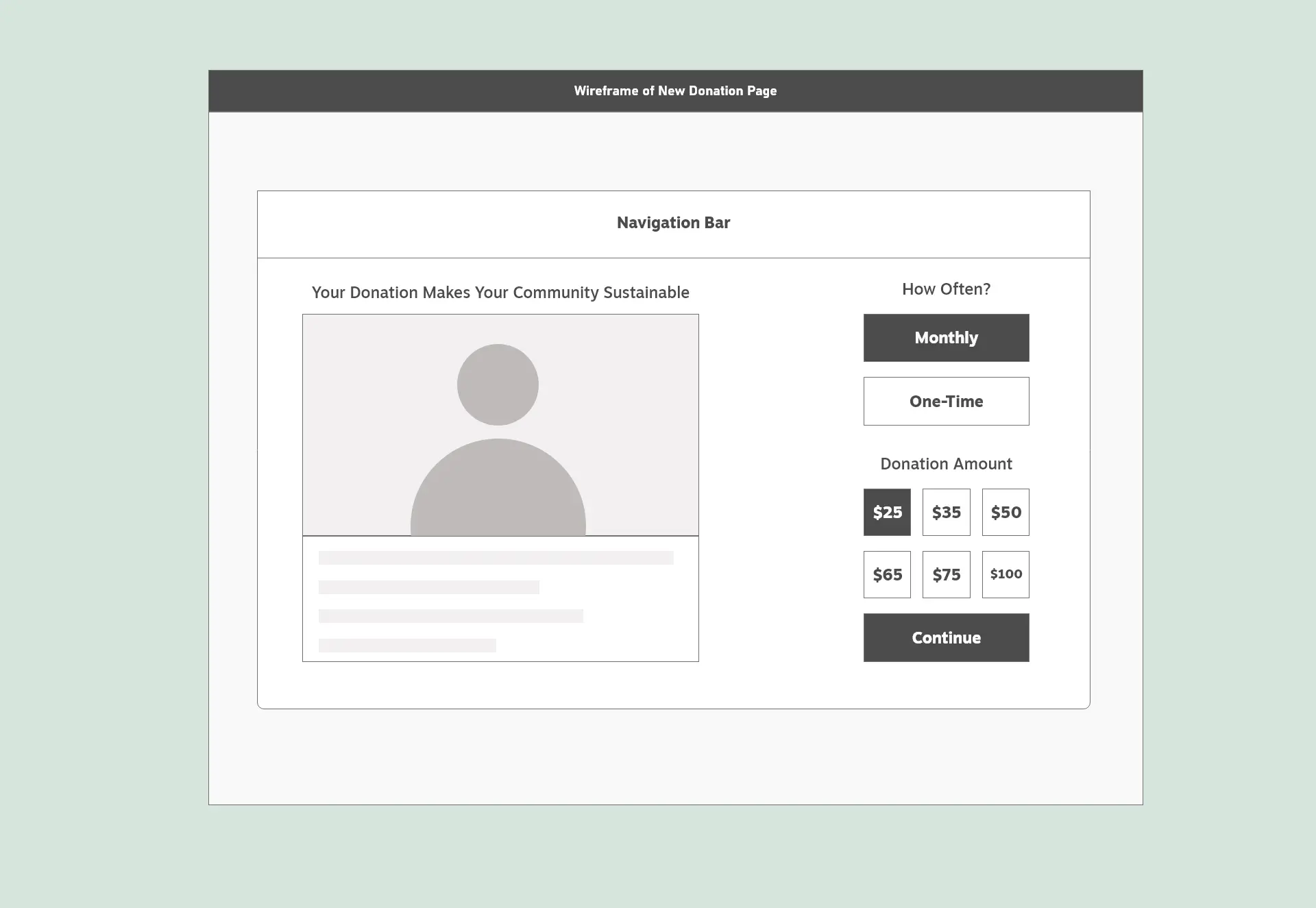
Wireframing the solution
During the interviews, the team uncovered that the largest reasons that donors contributed to a cause were that the organization made them feel that they are a part of a mission, they don't have time but want to contribute, they want to take action into their own hands, and personal health.
So our solution was to redesign all content the donor would have with the company to better fit the needs of these individual contributors. However, for brevity, I will focus on the redesign of the donor page.
Design Phase - High Fidelity Prototype
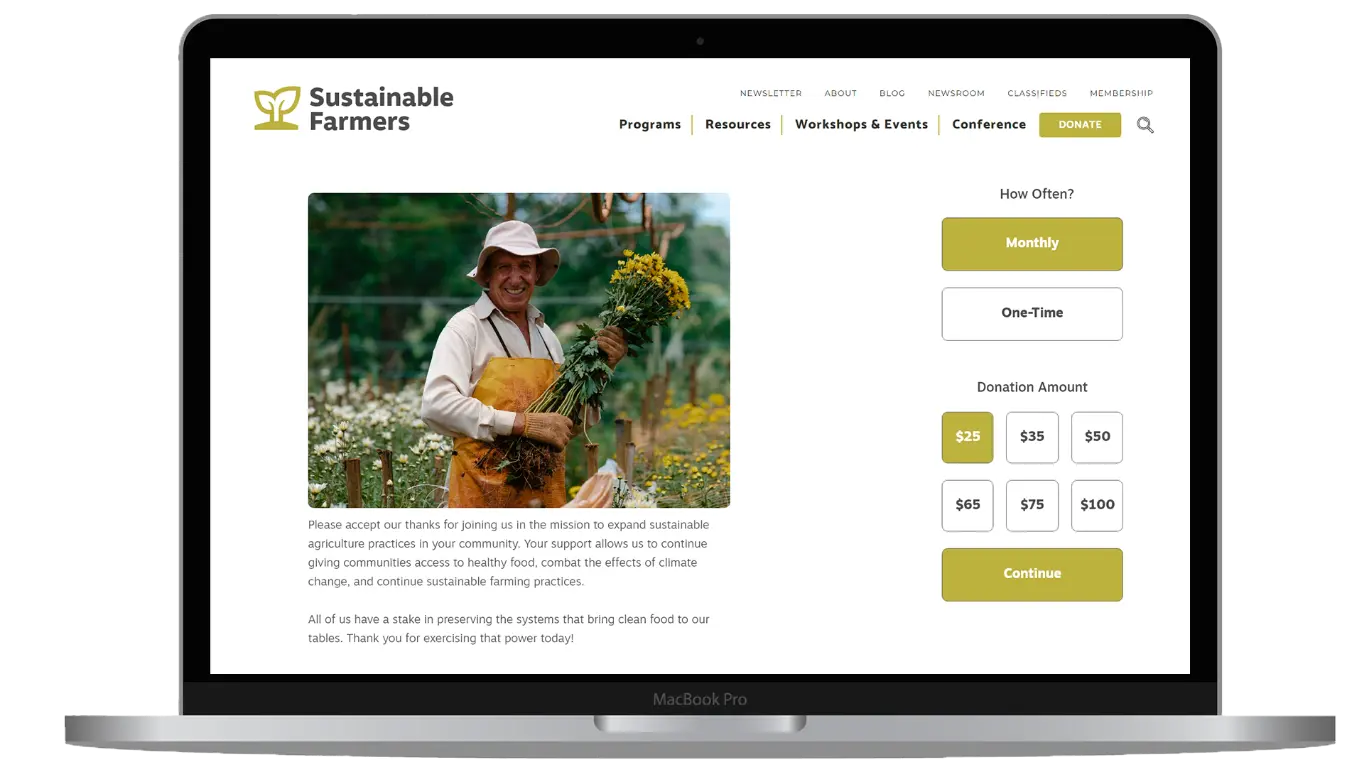
Prototype of the redesign
Our team redesigned the donation page to better appeal to individual donors as research indicated that the non-profit's webpage is the most common place users visit in order to make a donation. This design was also tailored to conform to the client's original website design. Below is a modified prototype to preserve the anonymity of the client in this consulting project.
Testing Phase - User Testing
Testing the redesign of the mobile app
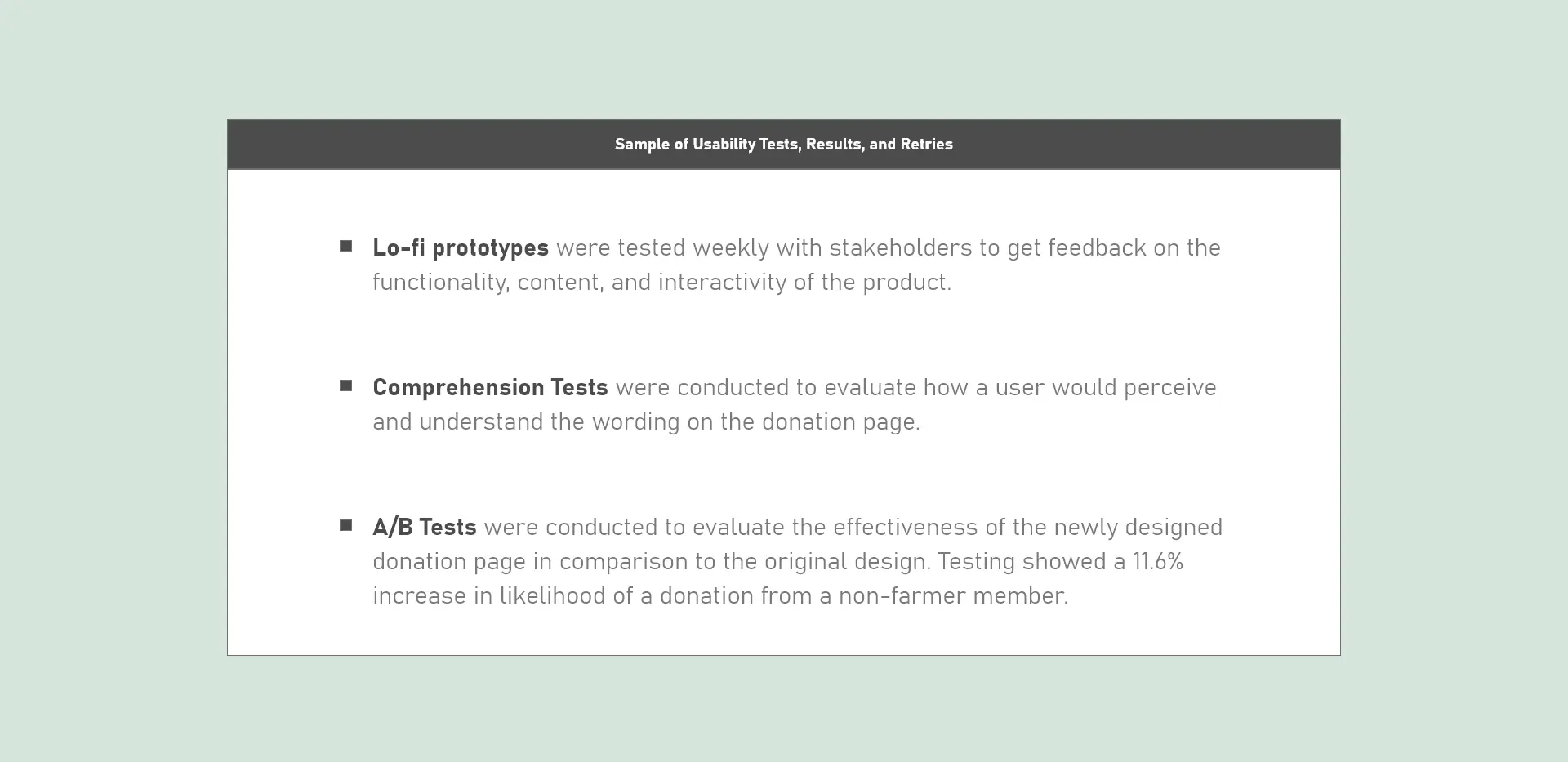
We were only able to build this service and web app with repeated testing and adjustments to the user's experience. Below are the tests that we did in order to craft an experience that users enjoy. These include some of the successes, failures, and adaptations we had to make to create a product that users would enjoy.
Lessons Learned
What lessons were learned during this process?
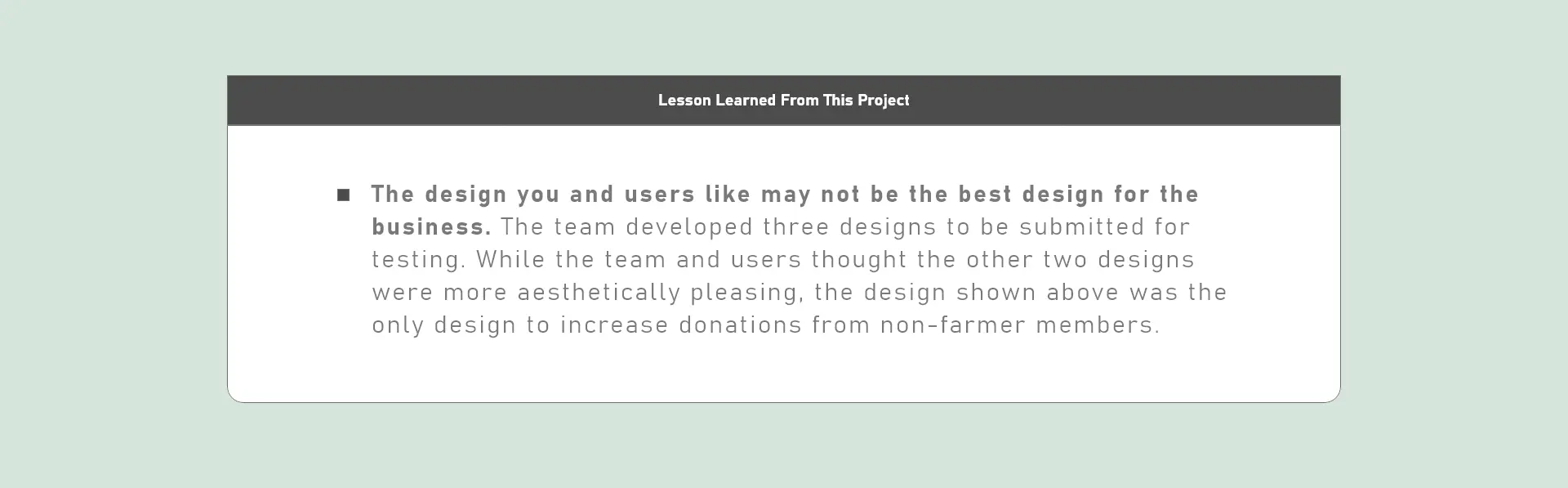
Building unique and valuable user experiences is never straight forward because of the often different and sometimes competing needs of the business, stakeholders, and customers. However, each project allows me to reflect and better my building approach for the next project. Below are a few lessons learned from this project.