Health Map
A web app for analyzing a community's health
About the project
Quickly perform GIS data analysis from anywhere
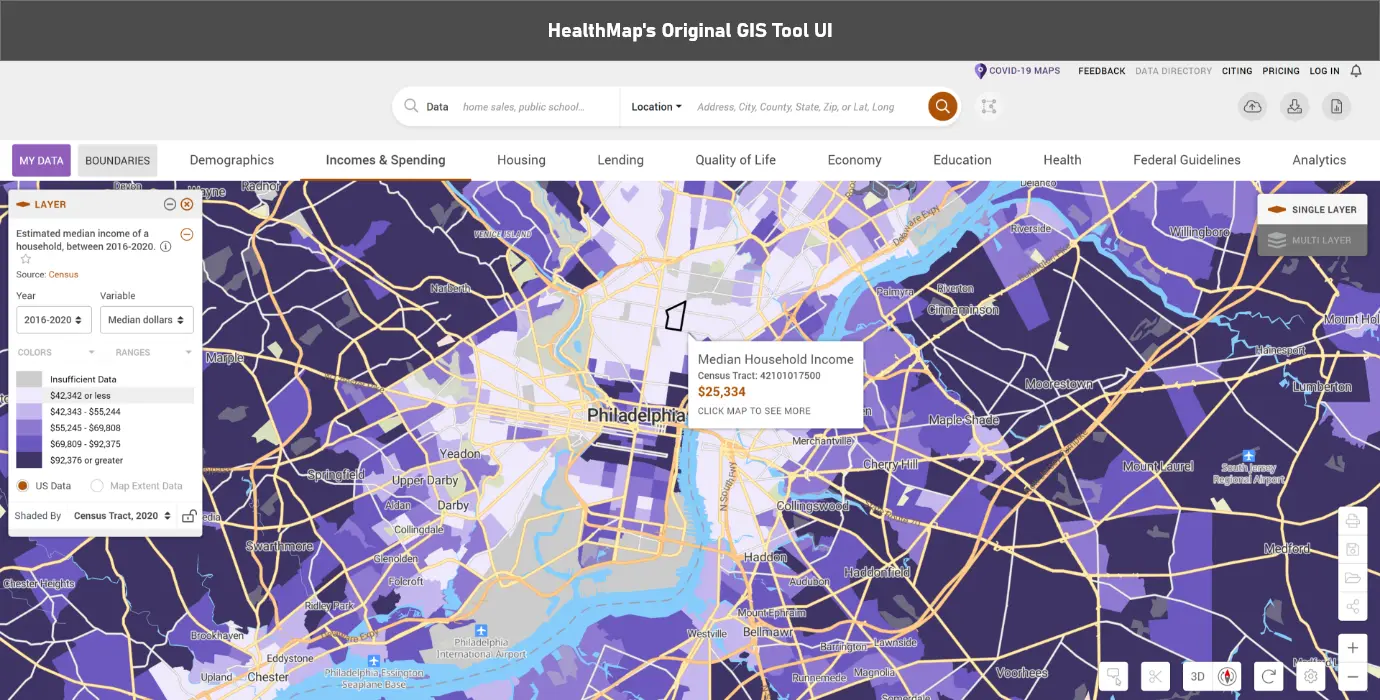
Gaining quick access to meaningful health related GIS data is a top concern for executives and researchers in health departments around the nation. In this case study, my team was tasked with enhancing the usability of HealthMap's GIS tool so that the company could expand its market share in the highly competitive GIS market. The main challenge in this project is that the our team needed to research how users were using the software, how users viewed competition, find out what features and data were missing from the application, and then design an effective solution that would benefit both the company and the end users. In the end, our team submitted a redesigned application that was mobile friendly and in line with stakeholder expectations.
You can see a redacted version of the full 131 page study here.
Like many consulting engagements, this project was created under a non-disclosure agreement with Fox Management Consulting. Thus the name of the ultimate client has been renamed to HealthMap in order to keep the identity of the client a secret in accordance with the non-disclosure agreement.
Role
UX Researcher
Client
Fox Management Consulting
Type of Business
B2B
Date
2020
Planning phase - Customer Interviews
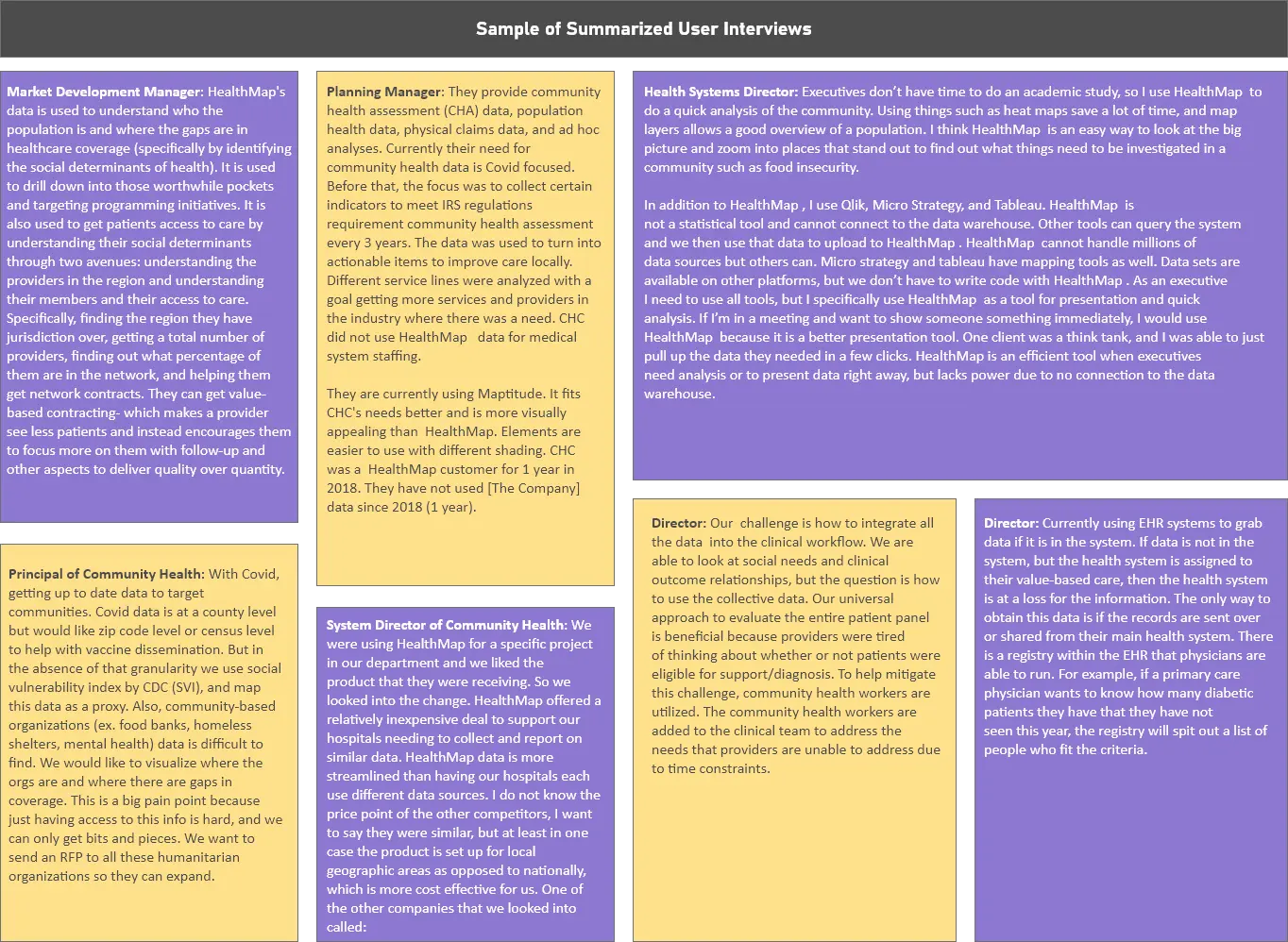
Finding the right customers to interview
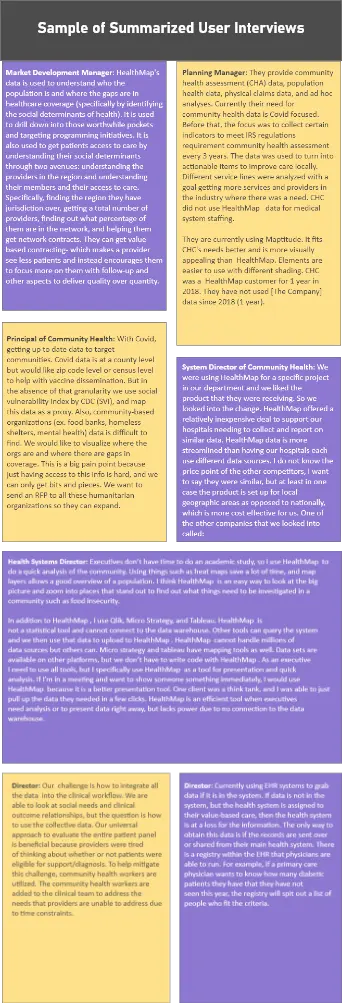
In order to develop a solution for the GIS user group, we must start by identifying the right users. Fortunately for our team, we were given 10 current and former users with whom we conducted face-to-face interviews. Below is a sample of what users spoke about during the interviews.
Planning phase - Interview Insights
Customer pains, gains, and behavior
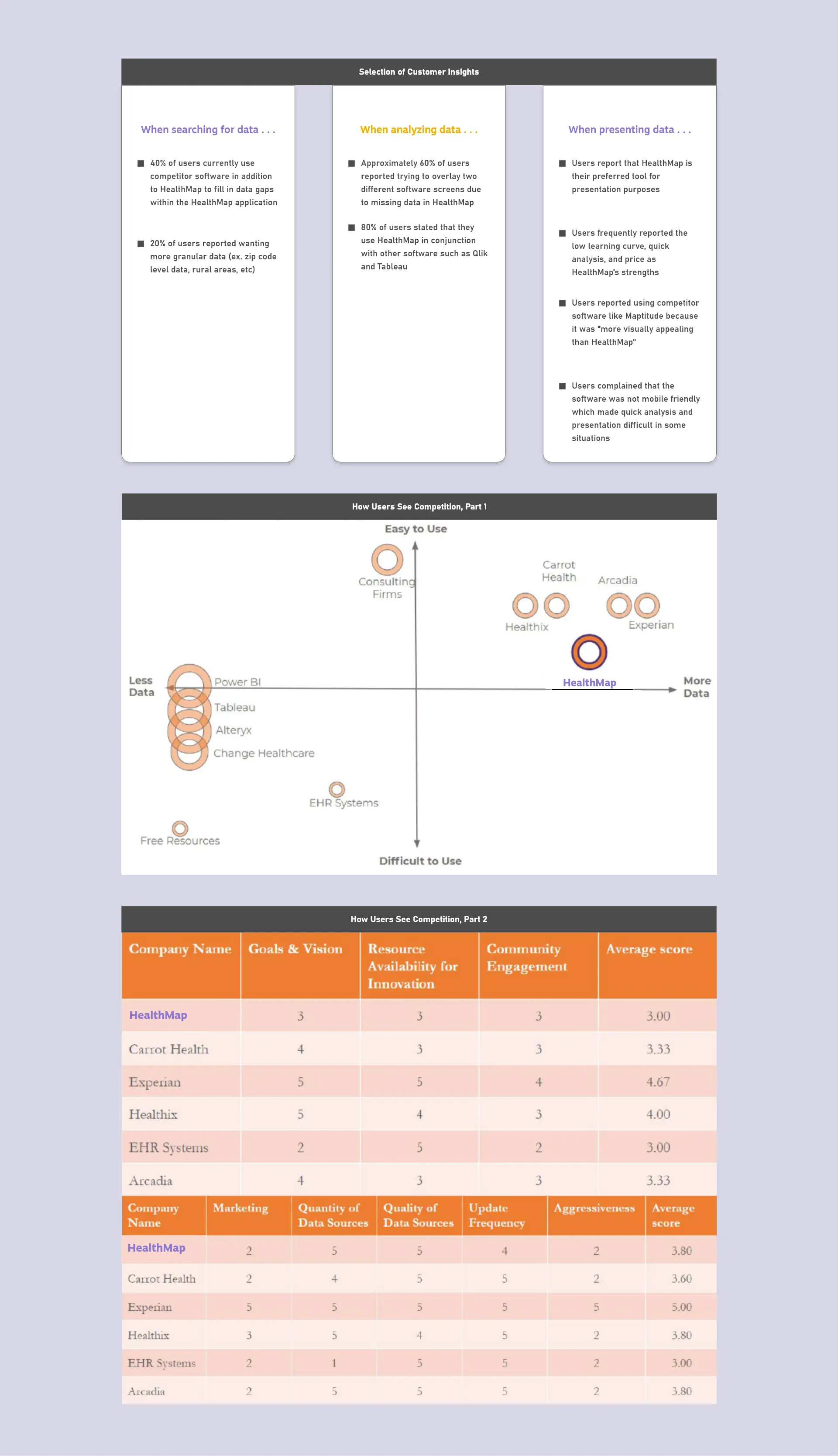
Understanding customer behavior is very important in designing a solution for a specific user group. In this study, we wanted to understand the pains that users felt when using HealthMap to conduct research, and what solutions their companies used as alternatives to HealthMap's GIS tool. Below is a brief look at the insights we gained from interviewing 10 current and former users of HealthMap's GIS tool.

Planning phase - Customer Personas
Who are our customers?
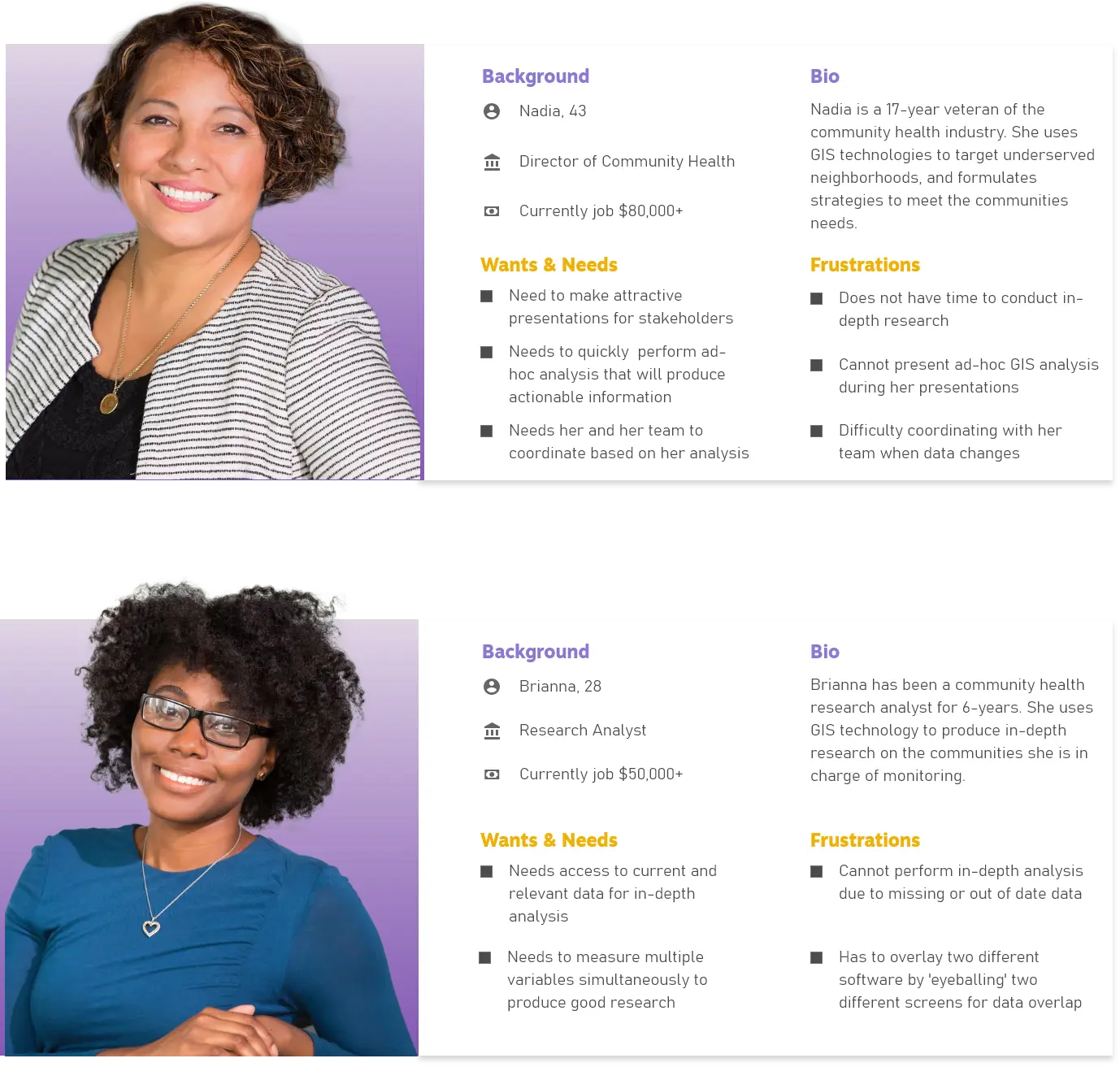
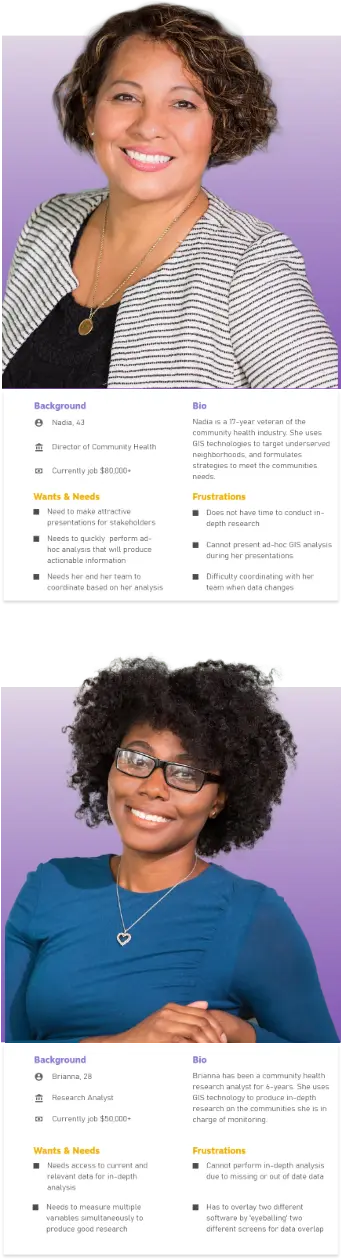
During the interview and survey phase of our research, we started to notice that users fell into one of two groups: Managers and executives that were responsible for creating presentations, conducting quick analysis, and making decisions based on that analysis. And researchers who were responsible for in-depth analysis.
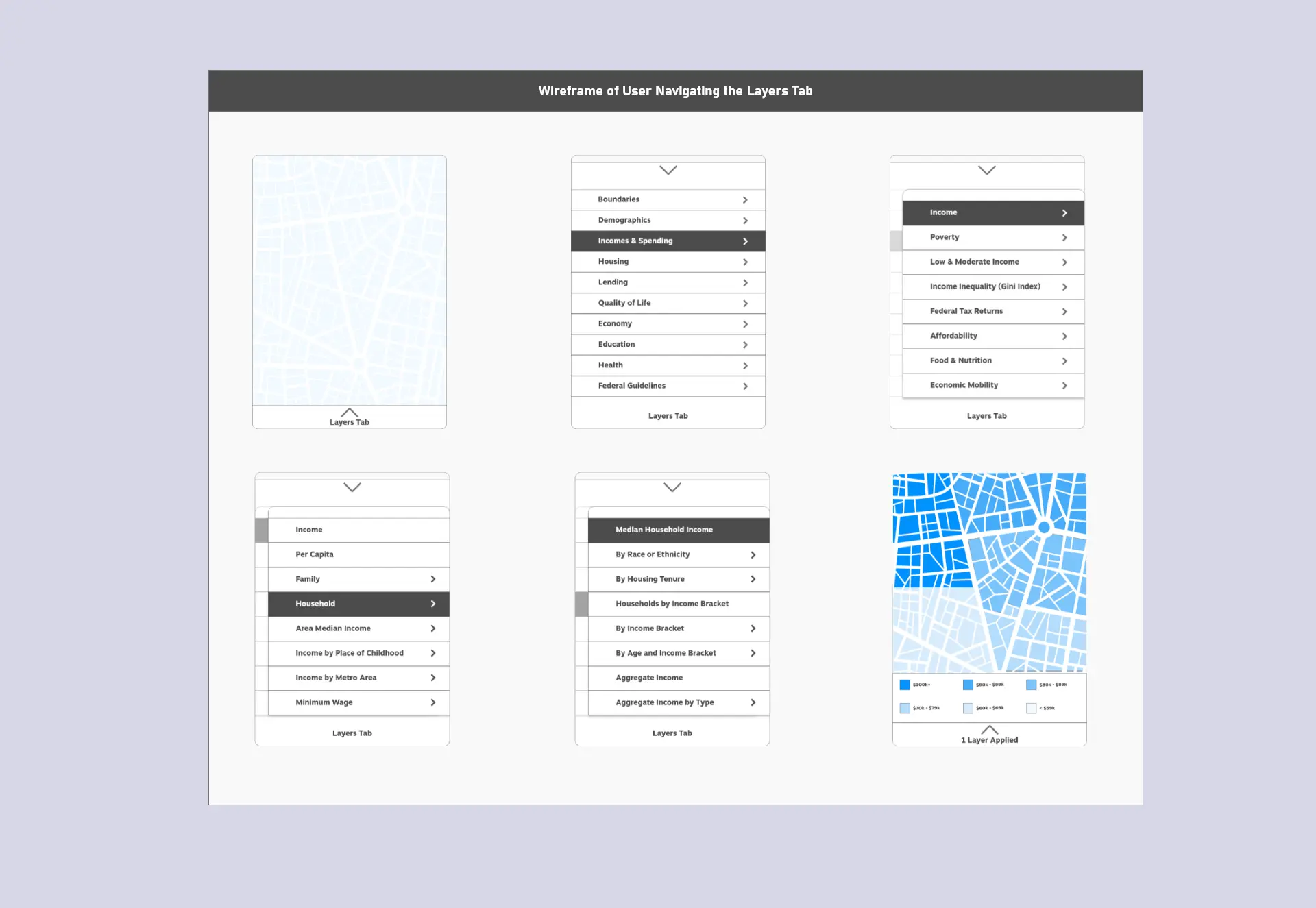
Design phase - Lo-fi Wireframes
Wireframing the solution
During the interviews, the team uncovered that the largest impediments to usability on the HealthMap platform were the unattractiveness of the user interface as compared with competitors, the GIS tool was not mobile friendly, and users were overlaying different maps on different software platforms in order to conduct better analysis.
So our solution was to redesign the mobile user interface to be more appealing, and to re-work the layering system to alleviate the pain of having to manually overlay data from other software.

Design Phase - High Fidelity Prototype
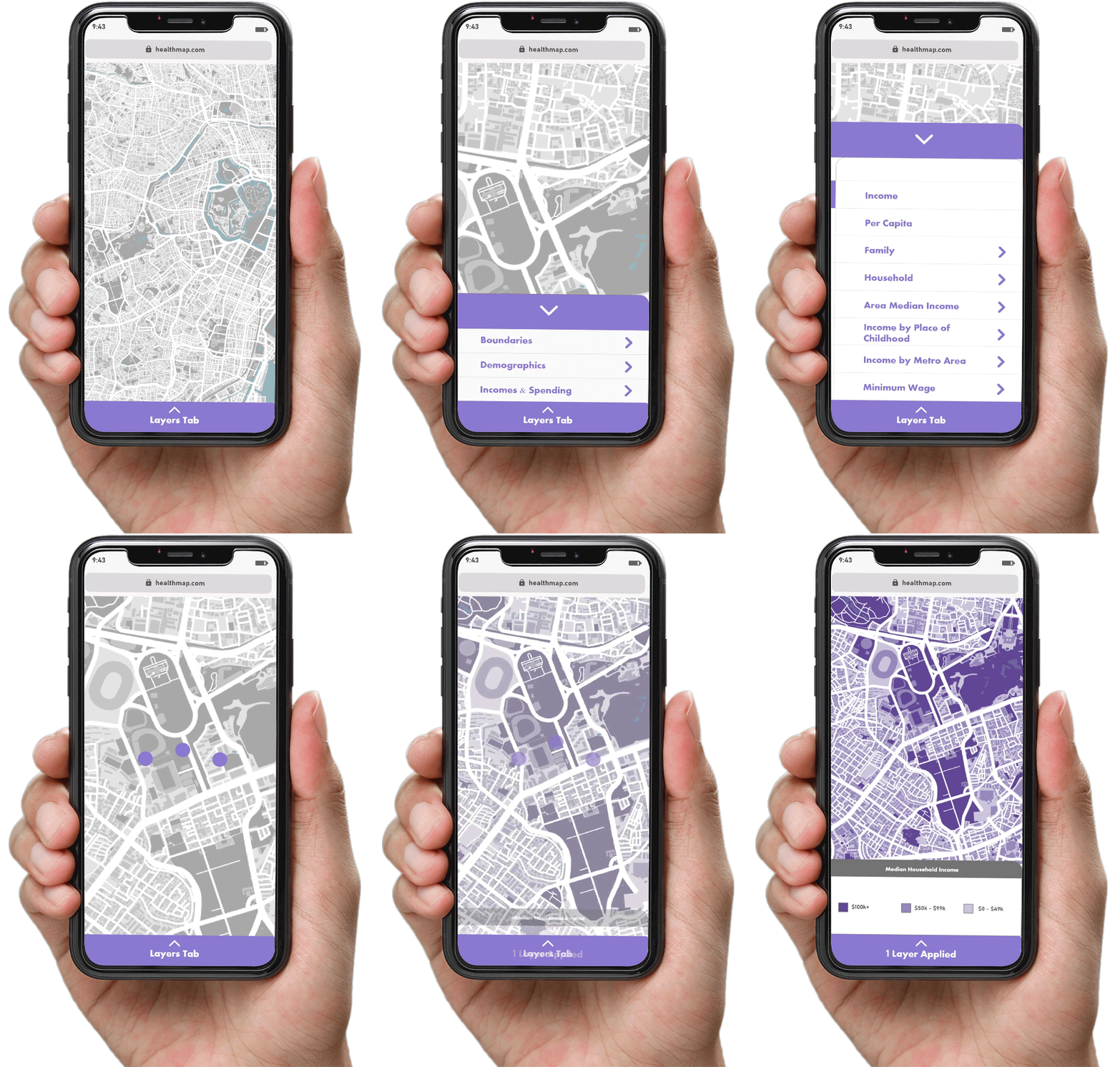
Prototype of the redesign
For the final design, our team created a mobile-friendly tab that would enable users to easily navigate the application's menus, and keep track of each layer that is selected. Below is a modified prototype to preserve the anonymity of the client in this consulting project.
Testing Phase - User Testing
Testing the redesign of the mobile app
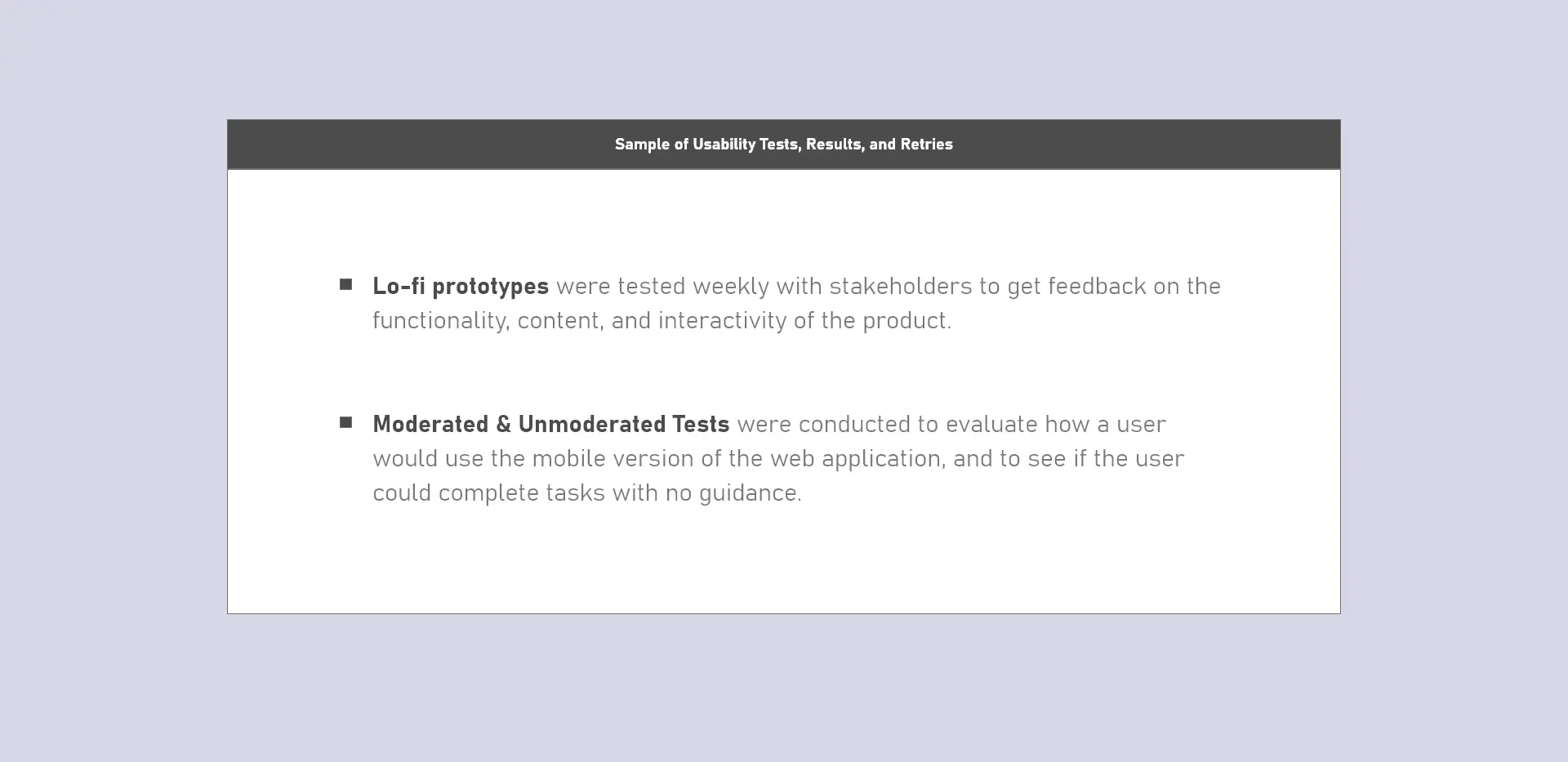
We were only able to build this service and web app with repeated testing and adjustments to the user's experience. Below are the tests that we did in order to craft an experience that users enjoy. These include some of the successes, failures, and adaptations we had to make to create a product that users would enjoy.
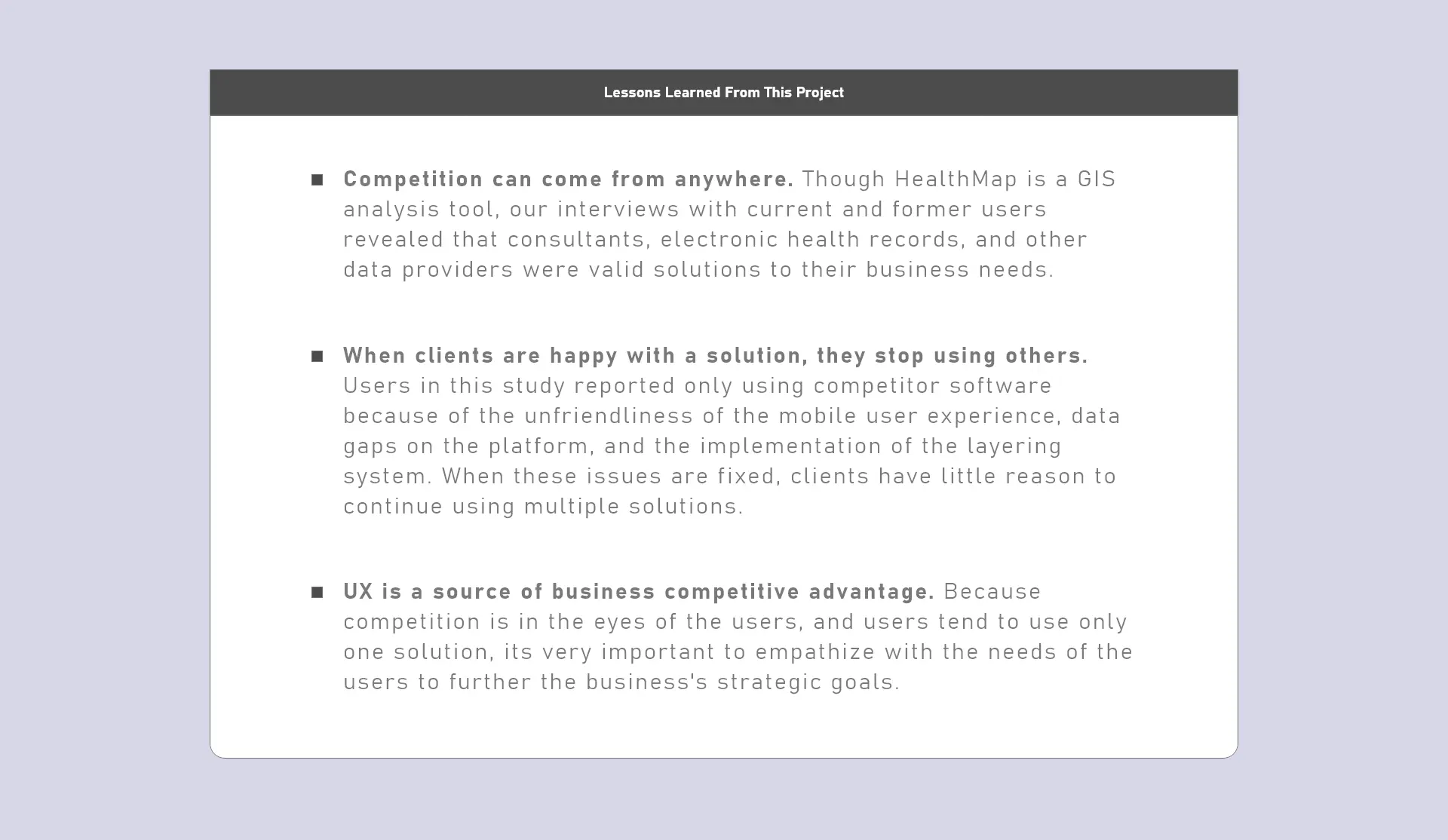
Lessons Learned
What lessons were learned during this process?
Building unique and valuable user experiences is never straight forward because of the often different and sometimes competing needs of the business, stakeholders, and customers. However, each project allows me to reflect and better my building approach for the next project. Below are a few lessons learned from this project.